Table of Contents
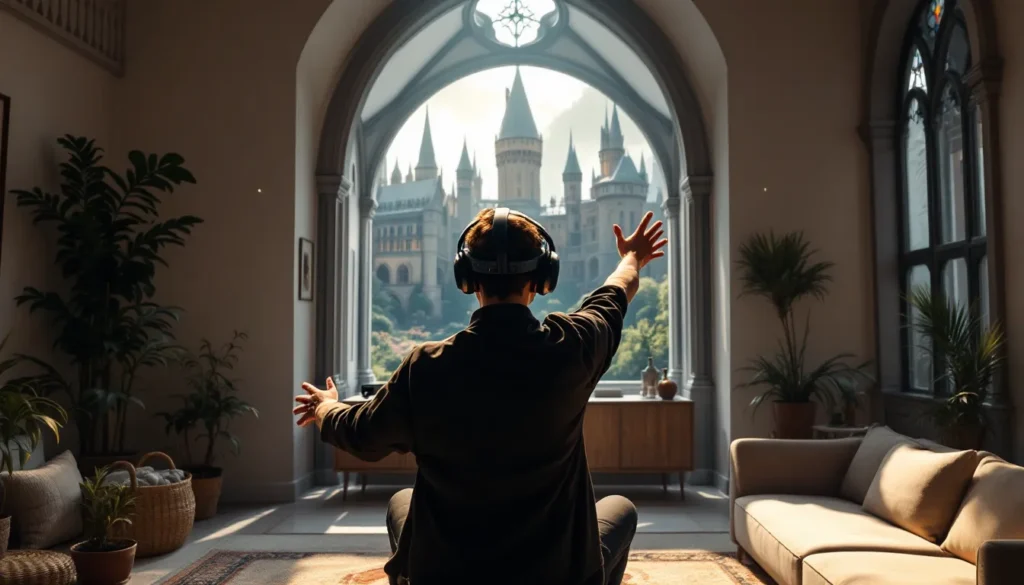
ToggleHogwarts Legacy VR transforms the beloved wizarding world into something truly extraordinary, a fully immersive experience where you’re not just playing the game, you’re living it. Whether you’re stepping into the castle halls for the first time or you’re already deep in your magical studies, the VR version elevates everything: wand casting feels tangible, dueling opponents feels personal, and exploration becomes genuinely awe-inspiring. If you’ve been curious about what Hogwarts Legacy VR actually offers, how it performs, and whether it’s worth diving in, this guide covers everything you need to know to get started and master the experience in 2026.
Key Takeaways
- Hogwarts Legacy VR delivers genuine immersion through gesture-based spell casting, spatial audio, and 1:1 scale exploration that elevates the wizarding world beyond the flat-screen version.
- The VR experience requires high-end hardware: RTX 4070 Ti or better for PC, or a PlayStation 5 with VR2 headset, with 150GB storage and consistent 90fps performance being essential for comfort.
- Gesture-based spell casting replaces button inputs with physical motions for each spell, creating intuitive and satisfying combat that feels like actually performing magic after 30 minutes of practice.
- All original story content, quests, characters, and locations from Hogwarts Legacy are fully present in VR, with no stripped-down experience and complete voice acting throughout.
- Hogwarts Legacy VR is recommended for VR headset owners and Harry Potter fans, though it demands long play sessions (60–100 hours), and returning players should weigh whether $60–70 justifies replaying familiar story beats in immersive form.
What Is Hogwarts Legacy VR?
Hogwarts Legacy VR is a virtual reality adaptation of Avalanche Software’s acclaimed action RPG, bringing the wizarding world to life with unprecedented immersion. Rather than simply converting the flat-screen version into VR, this implementation was built specifically for headset play, featuring redesigned controls, recalibrated scale, and spatial audio that makes Hogwarts feel genuinely three-dimensional around you.
The core experience remains faithful to the original: you’re a late-enrolled student at Hogwarts School of Witchcraft and Wizardry, tasked with learning spells, completing quests, and uncovering secrets hidden throughout the castle and its grounds. What changes in VR is the presence. Standing in the Great Hall with thousands of virtual candles floating overhead, or gripping your wand to cast spells with natural hand motions, these moments define why VR adaptation matters here.
The game launched with full story parity to the desktop and console versions, meaning no stripped-down experience or missing content. All quests, characters, and locations from the original are present, though optimized for the intimacy of VR gameplay. You’re experiencing the same Hogwarts Legacy, just through an entirely different lens, literally and figuratively.
Platform Availability and System Requirements
Hogwarts Legacy VR launched initially on PlayStation VR2 and PC VR platforms, with availability expanding through 2026. The game supports PlayStation VR2 (PS5 exclusive), PC VR via Meta Quest 3S/Pro, Valve Index, HTC Vive, and Windows Mixed Reality headsets. As of early 2026, there’s no confirmed Nintendo Switch or Xbox VR support, though the landscape may shift depending on hardware developments.
PC VR Setup and Specifications
PC VR demands are notably higher than the flat-screen version because of increased rendering resolution and real-time spatial tracking. You’ll need a solid gaming PC with these minimum specs:
- GPU: NVIDIA RTX 3070 Ti or AMD RX 6800 XT equivalent (high-end VR rendering is demanding)
- CPU: Intel i7-12700K or AMD Ryzen 7 5800X3D (fast processors handle frame timing better)
- RAM: 32GB (VR applications benefit significantly from extra memory)
- Storage: 150GB SSD space (the game is large, and VR needs fast load times)
- Headset: Meta Quest 3S (wireless via Air Link/Virtual Desktop), Valve Index, HTC Vive Pro 2, or comparable device
The sweet spot for smooth 90fps gameplay (crucial for VR comfort) lands in the RTX 4070 Ti or better territory on NVIDIA, or RX 7900 XT on AMD. Anything less and you’ll be scaling graphics settings or dealing with reprojection, which degrades the immersion VR depends on.
PlayStation VR2 Requirements
PlayStation VR2 simplifies things considerably, it’s a self-contained experience on PS5. There’s no PC to build or settings to tweak beyond the in-game graphics menu. All you need is:
- PlayStation 5 (standard or digital edition)
- PlayStation VR2 headset and controllers
- 150GB free storage on your PS5
- A USB-C cable and power adapter for the headset
PS5 VR2’s advantage is consistency. Every player experiences the same performance, no driver updates or compatibility headaches. The trade-off is less graphical granularity, you’re locked into whatever visual tier PlayStation and Avalanche Software deemed optimal for the hardware. That said, PS5 VR2 performance is genuinely solid, consistently hitting 90fps with detailed visuals.
Getting Started: Installation and Initial Setup
Installation varies by platform, but the process is straightforward once your hardware is ready.
On PlayStation VR2: Insert the disc or purchase digitally from the PlayStation Store. The game downloads to your PS5 (be patient, 150GB takes time). Once installed, launch from your library, put on the headset, and calibrate it following the on-screen prompts. The calibration process, standing in your guardian boundary while Hogwarts Legacy detects your space, takes about 5 minutes.
On PC VR: Download through Steam (search “Hogwarts Legacy VR”). Once installed, launch the game, select your VR headset type from the menu, and allow the game to calibrate your play space. If using Meta Quest 3S wirelessly, set up Air Link or stream via Virtual Desktop, this adds a setup layer but offers freedom of movement around your play space.
Both versions prompt you to set your play space size. Be honest here: if you tell the game you have a 10×10 meter play space when you actually have 2×2 meters, collision detection won’t protect you from punching a wall. The game uses this boundary to spawn objects and prevent walking into real furniture.
After calibration, you’ll create your character, choose house, appearance, voice, and backstory. This mirrors the standard game, and the character creator is reasonably robust. Then you’re dropped into the opening cinematic, and you’re officially a Hogwarts student in VR. From there, tutorials guide you through the basics.
Essential Gameplay Mechanics and Controls
Hogwarts Legacy VR redesigned controls from the ground up to work naturally with motion controllers rather than traditional gamepads. The result feels intuitive after about 30 minutes of practice, though it’s initially different from what standard players expect.
Spell Casting and Wand Mechanics
Wand casting is the heart of Hogwarts Legacy VR gameplay. Instead of pressing a button to cast Expelliarmus, you physically perform the spell’s gesture with your controller. This sounds gimmicky, but it’s remarkably satisfying and immersive.
Here’s how it works:
- Hold grip button to activate spell mode (your hand glows to signal readiness)
- Perform the specific gesture (each spell has a unique motion, swift downward slash for Diffindo, circular motion for Stupify)
- Release or confirm to cast the spell
- Recharge between casts with a brief cooldown (no mana system, just per-spell cooldowns)
Learning spell gestures takes time. Hogwarts Legacy VR provides a training wand early on where you practice motions without consequences. Spend 20 minutes there, it’s not wasted time. Once gestures become muscle memory, combat flows incredibly naturally. You’re not hunting through spell menus: you’re just thinking “I need to stun that enemy” and your hands know what to do.
Advanced spells unlock as you level and progress through the story. Late-game spells like Avada Kedavra have complex gestures that demand precision and rhythm, adding genuine skill expression to combat.
Movement and Navigation in VR
Movement uses smooth locomotion (continuous forward movement) controlled by your thumb on the movement stick or touchpad, depending on headset. This is gentler on motion sickness than teleporting, which matters during long play sessions. You’ll use smooth movement to walk around Hogwarts and the grounds.
Turning happens via two methods: smooth rotation (stick) or snap-turn (increments, friendlier for people sensitive to motion). Most players find snap-turn with 45-degree increments strikes the right balance between comfort and natural rotation.
Climbing uses natural hand-over-hand motions when you grab ropes or scaffolding. Your character mimics your actual arm movements, this immersion is incredible the first time you pull yourself up a library shelf.
Sprinting requires holding a button while moving forward. Unlike the flat version, you can’t sprint indefinitely: stamina is more punishing in VR to maintain balance and prevent motion sickness from sustained speed.
Exploration and World Interaction
Hogwarts Castle is staggering in scale when experienced in VR. Ceilings stretch impossibly high, corridors extend far enough to genuinely make you feel small. Exploration benefits dramatically from the immersive perspective, you’ll catch environmental details and find secrets in ways the flat-screen version doesn’t encourage.
Navigating Hogwarts Castle and Surrounding Grounds
Navigation uses a combination of smooth locomotion and the map system. Open your in-game map by looking at your left wrist, the map appears as a physical object you can examine. This is far less intrusive than a 2D menu overlay: it feels like you’re actually consulting magical parchment.
The castle layout mirrors the original game: main corridors connect to wings (Ravenclaw Tower, Slytherin Dungeon, Hufflepuff Common Room), and secrets hide behind locked doors, up spiral staircases, and inside alcoves. The vertical scale is what gets you, seeing Dumbledore’s office tower stretch above you, or looking down from a balcony and seeing the Great Hall four stories below, creates a sense of place that flat screens simply can’t match.
Optional destinations, The Undercroft, the Room of Requirement, and hidden chambers, are marked on your map once discovered. Without spoiling, several late-game locations are genuinely breathtaking in VR. One particular location involving ancient magic is almost worth the price of admission alone.
Discovering Hidden Secrets and Collectibles
Collectibles in Hogwarts Legacy VR include Field Guide pages (lore entries for creatures and objects), Demiguise statues (unlocking spells), Gear chests (equipment), and Legendary spells (powerful late-game unlocks). The VR version adds physical interactivity to collecting them.
To grab a collectible, you simply reach out and grab it with your hand. This sounds minor, but the tangibility of actually picking up a rare chest or gently removing a page from a book feels rewarding in ways button-presses don’t.
One challenge: some secrets require solving environmental puzzles or casting specific spells. The Hogwarts Legacy Clock Tower is a canonical example, you’ll need to manipulate objects and cast spells in sequence. VR makes these puzzles more spatial and intuitive. You’re not reading a hint guide: you’re standing in front of the puzzle and figuring out the mechanism with your hands.
Another collectible tier involves secrets hidden in plain sight, rewarding exploration. The Hogwarts Legacy Viaduct Bridge area contains treasures and lore secrets scattered throughout, and finding them in VR feels like genuine discovery rather than following a checklist.
Combat and Dueling Strategy
Combat in Hogwarts Legacy VR is where gesture-based spell casting shines. Rather than cycling through spell wheels, you’re actively performing magic, which changes how you approach encounters.
Engagement flow works like this: enemies spawn at medium range, you assess threats, and you cast spells via gesture. Each spell has a casting time, Expelliarmus casts quickly, while Stupefy demands a precise motion that takes half a second. Enemies attack mid-cast, forcing you to dodge by physically moving your body or leaning.
Dodge mechanics use your position in play space. If an enemy casts a red spell toward you, duck or sidestep within your actual play area. This is both immersive and exhausting, a 10-minute boss fight will leave you sweating.
Dueling specifically (one-on-one encounters against human opponents) adds a layer of prediction and timing. You’re reading your opponent’s stance and hand position to anticipate their spell, then interrupting with a faster cast or countering with a shield spell. It’s surprisingly strategic and genuinely tense in VR.
Advanced tactics unlock as you unlock higher-tier spells:
- Ancient Magic slowed time: When ancient magic pools appear during combat, cast a specific gesture to freeze enemies briefly. This window is critical for landing high-damage spells like Avada Kedavra.
- Potion throwing: You can brew and throw potions mid-combat. Brewing potions happens at cauldrons, and you’ll want some ready before tough fights.
- Environmental objects: Some encounters allow you to grab objects (rocks, barrels) and throw them at enemies as crowd control or damage.
Difficulty scales (Story, Regular, Hard, Nightmare), and Nightmare difficulty demands genuine mastery, you’ll need to chain spells effectively, manage cooldowns, and use cover strategically. The gesture system means you’re actually doing magic, not just executing a rotation, which makes victory feel earned.
Building Your Character and Progression
Character progression in Hogwarts Legacy VR splits into two tracks: ability trees (passive skills) and spell unlocks (active magic you cast).
Choosing Your Magical Abilities and Talents
Ability trees offer three paths:
- Spellcraft: Faster spell casting, reduced cooldowns, improved accuracy. Pick this if you want rapid-fire magic.
- Dark Arts: Powerful forbidden spells with steep costs (health drain, cooldown penalties). High-risk, high-reward.
- Traits: Passive bonuses to health, stamina, potion effectiveness, or enemy difficulty scaling.
Your initial house choice (Gryffindor, Slytherin, Hufflepuff, Ravenclaw) influences starting talents slightly, but by mid-game those differences fade. What matters is your playstyle: if you prefer aggressive casting, lean Spellcraft. If you want to tank damage and control crowds, balance Traits and defensive talents.
One standout ability: Stupefy Mastery (Spellcraft tier 2) reduces Stupefy cooldown by 40%. This spell is your workhorse, it stuns enemies mid-cast, interrupting threats. Mastery unlocks opens up aggressive playstyles.
Leveling Up and Unlocking Advanced Spells
You gain experience by defeating enemies, completing quests, and exploring. Every level grants one ability point and one spell point (separate). This dual-progression system is generous, you won’t feel starved for points, but you also can’t unlock everything simultaneously.
Spell unlocks are gated by progress, not just level. Some spells require reaching specific story chapters, while others demand finding Demiguise statues (collectibles scattered throughout Hogwarts). Late-game spells include:
- Avada Kedavra: Instant-kill spell requiring precise gesture and high level requirement. Unlocks after story chapter 4.
- Crucio: Torture curse dealing damage over time, unlocked similarly to Avada Kedavra.
- Bombarda: Area-of-effect explosion, useful for crowds.
You can cast all unlocked spells, not just equipped ones. But in the spell menu (accessed by holding menu button), you’ll assign your favorite spells to quick-cast slots, typically 4-6 spells you use most frequently. Practice with these slots to build muscle memory.
Leveling progresses at a steady pace. Most players finish the main story at levels 35-45, with plenty of late-game content pushing toward level 50+. The final content (post-game quests and dungeons) demands level 45+ and high spell mastery, so you’ll want to prioritize spell variety and ability bonuses across multiple playthroughs or extended single playthroughs.
Performance, Optimization, and Technical Tips
VR is unforgiving with performance. Frame drops, latency, or reprojection break immersion instantly. Hogwarts Legacy VR is demanding, so optimization matters.
Graphics Settings for Maximum Immersion
On PC VR, launch options are extensive:
- Resolution: Set to “Maximum” if you have headroom (RTX 4080+), otherwise “High.” Resolution impacts visual clarity: VR benefits hugely from crisp text and distant details.
- Refresh Rate: Set to your headset’s native refresh (90Hz for Quest 3S, 120Hz for Valve Index). Mismatched refresh rates cause judder.
- Shadow Quality: Reduce from Ultra to High or Medium. Shadows are expensive, and VR already demands heavy GPU load.
- Texture Quality: Keep at High. Textures are visible up close in VR: low textures break immersion immediately.
- Draw Distance: Set to High to see Hogwarts in full detail. Medium is acceptable if performance drops below 90fps.
Target 90fps consistently. Drops below 90 cause reprojection (frame-blending), which creates motion sickness and kills presence. If you can’t maintain 90fps on these settings, dial down resolution or refresh rate first.
On PlayStation VR2, you have two graphics modes: Performance (90fps, slightly lower visual fidelity) and Quality (60fps, enhanced visuals). Choose Performance. The frame rate stability matters more than visual details in VR, and 60fps in a headset causes motion sickness for many players.
Troubleshooting Common VR Issues
Motion sickness: Caused by frame drops, excessive smooth rotation, or long sessions. Solutions: reduce play session length (take 20-minute breaks), use snap-turn instead of smooth rotation, ensure 90fps consistency, and avoid quick head movements initially. It passes with acclimation.
Controller drift: Thumbstick inputs register incorrectly. On Quest headsets, recalibrate in settings. On Valve Index, tighten thumbstick caps. Persistent drift requires controller replacement.
Audio cutting out: Check headset volume, audio output device (some headsets support multiple audio routes), and game audio settings. On PC, disable exclusive audio mode in Windows settings.
Tracking loss: Happens when controllers move outside the headset’s sensor view. Keep controllers in front of your body, avoid mirrors (they confuse tracking), and ensure proper lighting. If tracking is consistently terrible, PlayStation 4 VR systems have different calibration: recalibrate play space if you’ve moved furniture.
Game crashing: Common on PC if drivers are outdated. Update GPU drivers monthly. On PS5, rebuild database (Settings > System > Storage > Rebuild Database) if crashes persist.
One overlooked tip: guardian boundary calibration. Redo this every few weeks if you rearrange furniture. A miscalibrated boundary causes the game to place objects in the wrong spatial spots relative to your room.
Is Hogwarts Legacy VR Worth Playing?
The honest answer: yes, but with caveats.
Strengths: Hogwarts Legacy VR nails immersion. Standing in the Great Hall, walking Hogsmeade, and casting spells with gesture controls creates moments of genuine wonder that the flat version doesn’t match. The story is unchanged from the original, fully voice-acted, emotionally resonant, with meaningful character arcs. Exploration feels rewarding in VR because the world feels tangible. Combat, even though being different from traditional gameplay, is satisfying and skill-based. The gesture system adds a layer of physical presence that elevates engagement.
Weaknesses: It’s demanding hardware-wise. You’ll need a capable PC or a PS5 with VR2 investment. The game is long (60-100 hours for completion), and not everyone finds repetitive gesture casting appealing after hour 40. Some players struggle with VR motion sickness, which affects immersion. The price point is steep, typically $60-70 for the VR version on top of headset costs. And if you’ve already finished the flat-screen version, the story isn’t new, though the experience is.
Best for: Players who own VR headsets and haven’t played Hogwarts Legacy. Starting with VR gives the story its maximum impact. If you already completed the original, you’ll still find the VR experience fresh enough to justify a replay, but it’s a personal call on whether $60 is worth revisiting familiar story beats in immersive form.
Recent coverage from Polygon and Game Rant acknowledged Hogwarts Legacy VR as one of the stronger VR adaptations released in recent years, praising the gesture casting system and castle exploration. Eurogamer’s Digital Foundry analysis highlighted PS5 VR2’s consistent performance as a strong selling point for console players without PC hardware concerns.
Bottom line: if you’re a Harry Potter fan with VR access, this is a must-play. If you’re on the fence about VR or already own the flat version, it’s a strong but not essential purchase. If you don’t own a headset yet, Hogwarts Legacy VR is an excellent reason to invest, it’s one of the best showcases for what VR brings to gaming.
Conclusion
Hogwarts Legacy VR transforms a great game into an unforgettable experience. The gesture-based spell casting, the scale of Hogwarts itself, and the tangible interactivity of exploration create a magic that goes beyond what traditional controllers can achieve. Whether you’re a hardcore fan reliving the wizarding world or a new player discovering it for the first time, the VR version offers genuine value through its immersive implementation.
The path forward is clear: ensure your hardware meets requirements, spend time mastering spell gestures during the training phase, and pace yourself through longer play sessions to avoid motion fatigue. Optimize graphics settings on PC or choose Performance mode on PS5 VR2. Explore thoroughly, Hogwarts is designed to reward curiosity in ways that feel natural in VR.
As VR tech continues evolving through 2026 and beyond, Hogwarts Legacy VR stands as a benchmark for how adaptations should work, faithful to source material, elevated by the medium, and genuinely fun to experience. If you’ve got the hardware, you’ve got a reason to explore the castle again.